Chimney Services » Mike O'Mara » Page 19
Our Company Blog
by Mike O'Mara | Oct 28, 2015 | Chimney Maintenance, Chimney Sweeping, fire safety
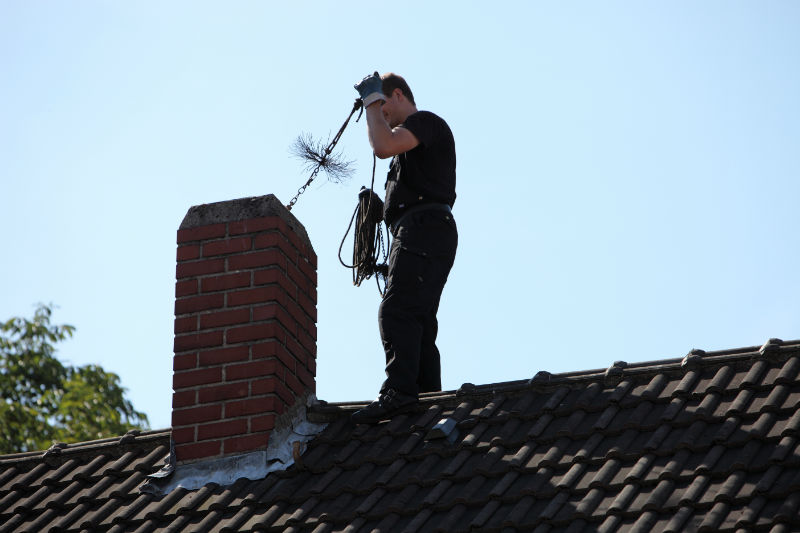
Call on a certified pro like those found at Weststar Chimney Sweeps to sweep your chimney
You may have seen chimney cleaning logs that claim to remove and reduce the accumulation of creosote in your chimney when you burn one of these logs in your fireplace or stove. You may even have thought that this could take the place of your annual professional chimney sweeping. However, when something sounds too good to be true, it usually is. Weststar Chimney Sweeps agrees with the Chimney Safety Institute of America (CSIA) that using chimney cleaning logs is not a substitute for the job our CSIA-certified chimney sweeps will do when they perform this yearly maintenance task on your chimney. We would like to tell you more about this product and why you should never rely on it as a way to properly and safely clean your chimney.
What are chimney cleaning logs?
A chimney cleaning log is a chemical product that does actually remove a portion of accumulated creosote from both masonry and metal chimneys. It does this through catalytic action that takes place when the log is burned in a fireplace or wood stove.
Why are chimney cleaning logs not a substitute for a professional chimney sweeping?
For one reason, a professional chimney sweeping from Weststar Chimney Sweeps will guarantee that every bit of accumulated creosote will be removed safely from your chimney. When you burn a chimney cleaning log, deposits of creosote will flake off and could either possibly cause a chimney fire by igniting after falling off or end up on the smoke shelf, where it creates another potential fire hazard.
Another reason is that a professional chimney sweeping includes much more than just creosote removal. Your chimney will be inspected to look for possible damage and potential problems. Our CSIA-certified chimney sweeps will also check for flue blockages and can take away birds’ or animals’ nests, leaves, and other debris that are blocking the exit of your chimney. This reduces the risk of a very hazardous situation: carbon monoxide leaks.
Should I use chimney cleaning logs in between my annual chimney sweepings?
The CSIA recommends that this type of chemical product should only be used under the supervision of a qualified chimney professional. Sometimes, layers of creosote can be so thick that chemical chimney cleaners must be used to change the chemical composition of creosote from hard or tacky to brittle or powdery in order to completely remove all of the creosote buildup. Our sweeps have been trained to use these chemical cleaners and know how to use them safely.
Have you scheduled your annual professional chimney sweeping yet? Contact us at Weststar Chimney Sweeps to make an appointment to have your chimney properly cleaned.
by Mike O'Mara | Oct 12, 2015 | Fireplaces
 Are you planning to build a new home with a fireplace and chimney? Or maybe you are thinking about adding a new fireplace to your existing house? Weststar Chimney Sweeps would like to tell you why you should hire a chimney company to construct the fireplace and chimney instead of a home building company. With so many different safety codes and standards that are involved in constructing a chimney, it is an excellent decision to go with chimney experts who have been certified by the Chimney Safety Institute of America (CSIA). To receive this certification, chimney technicians have to undergo extensive training on all of the different building codes that are required in the construction of a fireplace and chimney system, so you are guaranteed that all of the safety standards will be followed. To help you understand why you should choose a chimney company like us to build your new chimney and fireplace, we would like to tell you the two most important reasons why this choice is so important.
We understand exactly what a chimney is supposed to do.
Weststar Chimney Sweeps knows that you need your chimney to be able to vent all of the byproducts of combustion away from your home. We also understand that this process needs to happen without any damage being caused to your house. The CSIA offers a course on chimney physics that has taught us the best ways to ensure your chimney functions correctly. We also take into consideration that different kinds of heating appliances need to be matched to specific types of chimneys. We can match your particular heating appliance exactly to the right size and kind of chimney.
We have been trained on all of the applicable building codes and requirements for chimneys and fireplaces.
Our chimney technicians at Weststar Chimney Sweeps have been educated and trained to follow these codes, which are based on the National Fire Protection Association (NFPA) Standard 211 for Chimneys, Fireplaces, Vents, and Solid Fuel-Burning Appliances. Weststar Chimney Sweeps lines every masonry chimney we build with a liner that matches your heating appliance. We ensure all clearances from combustible materials are met to prevent your house from being ignited on fire due to the extremely high temperatures produced by the fireplace. We also follow the 3-2-10 rule that means chimneys must be three feet higher than the roof penetration on the shortest side, and the very top of the chimney must extend two feet above any portion of the building structure within 10 feet.
If you are planning on building a new home or on adding a new fireplace to your house, contact us at Weststar Chimney Sweeps. We will be proud to build you an efficient and safe fireplace and chimney system.
by Mike O'Mara | Sep 30, 2015 | Chimney Maintenance

Weststar Chimney Sweeps is your local source for chimney services!
When you own a home with a fireplace and a chimney system, you know that regular maintenance can help with keeping any potential problems under control. However, it is very common for repair issues to appear over the years. Sometimes you will know when your fireplace and chimney need repairing, and other times the signs that your chimney needs professional attention will be more subtle. Weststar Chimney Sweeps would like to tell you more about three different signs that can let you know that your chimney is in need of repairing and how we can fix these problems.
UNPLEASANT ODORS
If you happen to notice bad smells in your home coming from the fireplace, you most likely have a problem with chimney draft. Your chimney may not be producing enough draft to pull out the exhaust gasses from within, which causes that air to enter your home. Your flue could be too large for your heating appliance, or you could simply be having issues with how the wind is affecting your chimney draft. If the flue size is the issue, Weststar Chimney Sweeps can install a new stainless steel flue that exactly matches your heating appliance, which will improve both the draft and its performance. We can also install a draft-improving chimney cap on top of your chimney to help your chimney draft issues. This type of cap has vents on the sides that direct the wind to create a driving pressure at the top of the chimney. This driving pressure helps to pull out that smelly air so that it leaves your home instead of entering it through the fireplace.
LOOSE BRICKS
Whenever you notice any loose or missing bricks from the exterior of your chimney, you are seeing a sign of water penetration damage. As the Chimney Safety Institute of America (CSIA) says, water is the biggest enemy of a masonry chimney because of the damage it can do. Water can get into your bricks and mortar and erode these masonry materials until they get to the point of cracking and breaking apart. If type of water leak damage is not repaired, it can worsen to the point of the entire chimney structure collapsing. This is a hazardous situation that you definitely want to avoid, so contact Weststar Chimney Sweeps as soon as you notice any water damage so that we can make repairs and protect your chimney from further water leaks.
SMOKE FILLING ROOM
Trying to start a fire only to have a huge cloud of black smoke come back into the room? Most likely, your flue is blocked which is causing the smoke to come back into the house as it cannot exit out of the chimney. You could have debris from nesting materials from birds or animals, leaves, and soot forming a blockage. Sometimes, loose bricks have fallen into the chimney to block the exit. Fortunately, our CSIA-certified chimney technicians at Weststar Chimney Sweeps are experts at removing chimney blockages. We can clean out your chimney to have it working smoothly again.
Notice any of these problems? Contact us at Weststar Chimney Sweeps to schedule a chimney inspection so that we can make any necessary repairs.
by Mike O'Mara | Sep 17, 2015 | Waterproofing
If you have been watching the news this summer, it has been hard to miss the coverage of the upcoming El Niño weather event. Predicted to be one of the strongest in years, this El Niño has the potential to cause heavy rains and flooding in San Diego and the rest of Southern California. To be prepared for this weather event, Weststar Chimney Sweep provides waterproofing services that can keep your masonry chimney safe from the effects of heavy rains. We would like to tell you more about the coming El Niño event and how a waterproofing treatment can protect the bricks and mortar of your chimney from all of this water.
What exactly is El Niño?
The term El Niño refers to the large-scale ocean-atmosphere climate interaction linked to a warming in sea surface temperatures across the central Equatorial Pacific Ocean. El Niño typically affects the weather across North America during the following winter season. These effects include warmer-than-average temperatures over western and central Canada and over the northern and western United States. Heavy rains are also more likely due to El Niño, and NBC San Diego reports that meterologists are saying that the El Niño of 2015 will bring heavier than normal rainfalls to Southern California.
How can this heavy rainfall affect my chimney? 
The Chimney Safety Institute of America (CSIA) states that water is the biggest enemy of a masonry chimney, and this is because of the extensive and costly damage it can do. Heavy rainfalls lead to water penetration of masonry materials, and when water leaks into the bricks and mortar of a chimney, it weakens the materials and can eventually cause the structure to collapse.
How can waterproofing protect my chimney from water penetration?
At Weststar Chimney Sweeps, we use a formula that is 100% vapor permeable that will keep water from leaking into the bricks and mortar while still allowing vapors to exit the masonry materials and not become trapped to cause more damage. We apply this waterproofing formula to your entire chimney to prevent water penetration. Your masonry chimney will be protected from the heavy rains of El Niño after our waterproofing treatment.
Be ready for the effects of El Niño this winter. Contact us at Weststar Chimney Sweeps to schedule an appointment for a waterproofing treatment today.

by Mike O'Mara | Aug 31, 2015 | Chimney Maintenance, fire safety

Not sure what a damper is or what it does? Weststar Chimney Sweeps is here to help.
At Weststar Chimney Sweeps, we are often asked by our customers to explain damper locks and why they are necessary. These questions typically come from those who have just had a home inspected for real estate purposes and have been told by the home inspector that they need to install damper locks to be compliant with the California Uniform Building Code. We know exactly how to keep you under compliance with this code, and our Chimney Safety Institute of America (CSIA)-certified chimney technicians can install damper locks in your chimney system. We would like to tell you more about damper locks to inform you of this important and necessary safety component.
What exactly is a damper lock?
Also known as a damper clamp or a damper stop, a damper lock is a small C-clamp or steel beam clamp that serves to keep the damper in a fully open position.
Why do I need a damper lock?
According to the California Uniform Building Code, damper locks are required to be equipped on dampers for systems that vent any type of gas appliance. Whenever you burn a fire in your gas appliance, the damper must be locked open for safety reasons. This can prevent carbon monoxide from being forced back into your home. If the damper is closed, this poisonous gas has no way to exit out of the chimney. Without carbon monoxide detector alarms installed in your home, you and your family could easily become seriously ill from carbon monoxide poisoning as this toxic gas is odorless and tasteless.
Why are damper locks only required for gas appliances?
If you forget to open your damper when you are burning wood, the problem becomes obvious when the room quickly fills with smoke after lighting the fire. As we mentioned earlier, there are no obvious signs for not opening the damper during a gas-fueled fire. This is why the California Uniform Building Code has required that the damper be locked in a fully-open position. You will be protected from the dangers of carbon monoxide if you forget to open the damper or if your gas appliance is turned on accidentally.
How can I prevent heat loss from my home when the damper must be locked fully open?
To help keep the heated air from your gas fire inside your home, Weststar Chimney Sweeps can install glass doors in front of your fireplace. However, you should keep in mind that if you have a prefabricated or factory built fireplace, glass doors may not be an option for safety reasons.
Have more questions about damper locks? Contact us at Weststar Chimney Sweeps so that we can help you be compliant to this important state building code.