Chimney Services » Mike O'Mara » Page 23
Our Company Blog
by Mike O'Mara | Nov 25, 2014 | Chimney Inspections
 To become Chimney Safety Institute of America (CSIA)-certified chimney sweeps, our chimney technicians at Weststar Chimney Sweeps must pass an examination on the National Fire Prevention Association (NFPA) standard code 211, the standard for chimneys, fireplaces, vents, and solid fuel burning appliances. In this code, the NFPA developed three different levels of chimney inspections that all chimney sweep certified by the CSIA must strictly follow. Since the CSIA recommends an annual chimney sweeping and inspection, the organization also strongly suggests you should ask for the appropriate level of inspection for your chimney and venting system. To inform you of what each level involves to help you know which level to request, we would like to share with you an explanation of what happens during each chimney inspection level.
LEVEL 1
The simplest of the three levels of chimney inspection, ask for a Level 1 if your appliance or venting system have not changed and you are planning on using it as you normally have in the past. In this level of inspection, Weststar Chimney Sweeps will inspect all readily accessible parts of your chimney’s exterior and interior and all accessible parts of your chimney’s connection to the appliance. Checking for the soundness of structure and proper installation, our chimney inspectors will also verify your chimney is free from blockages and combustible creosote deposits.
LEVEL 2
Required when any change is made to your system, a Level 2 inspection examines changes in fuel type, changes to the size and shape of your flue, and changes to the heating appliance, such as when you have a fireplace insert installed. You must also request a Level 2 if you are selling or transferring your home and after building fires, chimney fires, earthquakes and tremors, and any weather-related event. Including everything performed in a Level 1 inspection, a Level 2 also examines the accessible parts to your chimney’s exterior and interior, including attics, crawl spaces, and basements. This level of inspection also addresses clearance from combustibles.
LEVEL 3
If a Level 1 or 2 inspection reveals a hidden hazard that cannot be evaluated without special tools to access concealed areas of your chimney or flue, Weststar Chimney Sweeps will recommend a Level 3 inspection, which is the most detailed of the three levels of inspection. When necessary, certain parts of the chimney must be removed for the evaluation to be complete. Parts that may be removed include the chimney crown or an interior wall of the chimney. This is only required when access is needed to areas that are subject to the inspection. Also, during a Level 1 or 2 inspection, if our chimney inspectors feel a serious hazard is present within your chimney or venting system, a Level 3 inspection may be required to examine the entire chimney or venting system.
Have questions about the three levels of chimney inspection? Contact Weststar Chimney Sweeps to find out more about each level.
by Mike O'Mara | Nov 15, 2014 | Chimney Maintenance
The thought of the threat of carbon monoxide poisoning happening in your home is very frightening; however, neglecting regular chimney maintenance can result in carbon monoxide leaking into your home without you even knowing it. Odorless, tasteless, and invisible, this toxic gas can become trapped within your house. If you do not have a carbon monoxide alarm installed to alert you of this danger, you and your family could get very sick or even die from continuously inhaling this poisonous gas. Another way to be safe from the dangers of carbon monoxide poisoning is to schedule an annual chimney sweeping and inspection from Weststar Chimney Sweeps. This step can stop this gas from entering your home in the first place. We would like to inform you about these dangers so that you can best protect yourself and your family.
How Does Carbon Monoxide Affect My Body?
When you breathe in carbon monoxide, the poisonous gas enters your bloodstream and how your blood treats this gas is the true danger. Hemoglobin, a protein in your blood, will always choose to pick up and carry the carbon monoxide and to ignore oxygen. Of course, we need oxygen flowing through our blood to keep our cells from suffocating. The amount of damage caused depends on how long and intense you are exposed to inhaling carbon monoxide, which makes detecting and preventing its presence so crucial.
How Common Are Deaths and Illnesses Due to Carbon Monoxide Poisoning?
According to the Chimney Safety Institute of America (CSIA), at least 200 people in the U.S. are killed every year from carbon monoxide poisoning caused by venting problems in their heating appliance systems. Approximately 10,000 cases of sickness related to carbon monoxide are recorded in hospitals each year as well.
What are the Side-Effects and Symptoms of Carbon Monoxide Poisoning?
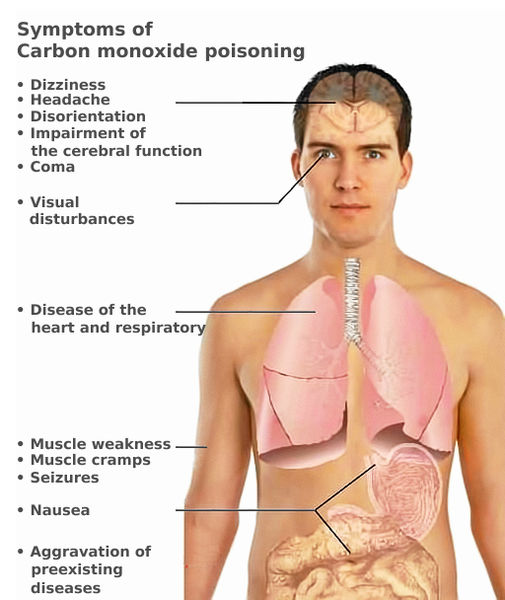
Side-effects of low-level exposure can include permanent brain and other organ damage. Unfortunately, the symptoms of low-level poisoning are very similar to those of the common cold: headache, dizziness, fatigue, and nausea. This can cause many misdiagnoses of carbon monoxide poisoning, which prolongs the exposure. If these symptoms do not go away, be persistent with your doctor and ask for a blood test to check for levels of this toxic gas. The sooner high levels are found, the sooner life-saving treatment can begin. High-level exposure to carbon monoxide can cause death.
How Does This Gas Come Into My House?
Poor ventilation is the primary cause of carbon monoxide coming into your home; however, the factors behind the venting problems include a damaged or missing chimney flue liner, large deposits of creosote, debris clogging the passageway, and nesting from birds or other animals blocking the flue.
How Can I Prevent Carbon Monoxide from Entering My Home?
All of the factors behind chimney venting problems can be corrected with an annual chimney sweeping and inspection from Weststar Chimney Sweeps. With cases of carbon monoxide-related health issues on the rise, our CSIA-certified chimney sweeps are extra careful to clean out any blockages, check flue liners for cracks and gaps, and replace a deteriorated chimney liner to protect you from the dangers of carbon monoxide poisoning.
If you have not scheduled your annual chimney sweeping and inspection this year, contact Weststar Chimney Sweeps today. Our staff will arrange a chimney sweep visit to your home as soon as possible to prevent carbon monoxide from entering your house.
by Mike O'Mara | Oct 31, 2014 | Venting
Depending on where you live, a whole house fan can be an economical and green way to cool your home in the summer. However, when you use these fans, several considerations must be taken to best benefit from their usage. Best for those who live in cooler climates with low humidity, whole house fans use less electricity to run than a central air conditioning system, cutting your cooling costs significantly. However, special venting must be arranged as these fans have a very strong suction ability. At Weststar Chimney Sweeps, we have been hired to clean up sooty messes in homes with whole house fans because the owners did not realize steps they should have followed before turning their fans on in their homes. We would like to share some whole house fan usage considerations suggested by Whole House Fan, a website dedicated to informing the public about this alternative to air conditioning.
Be sure to close your fireplace damper before turning on your whole house fan.
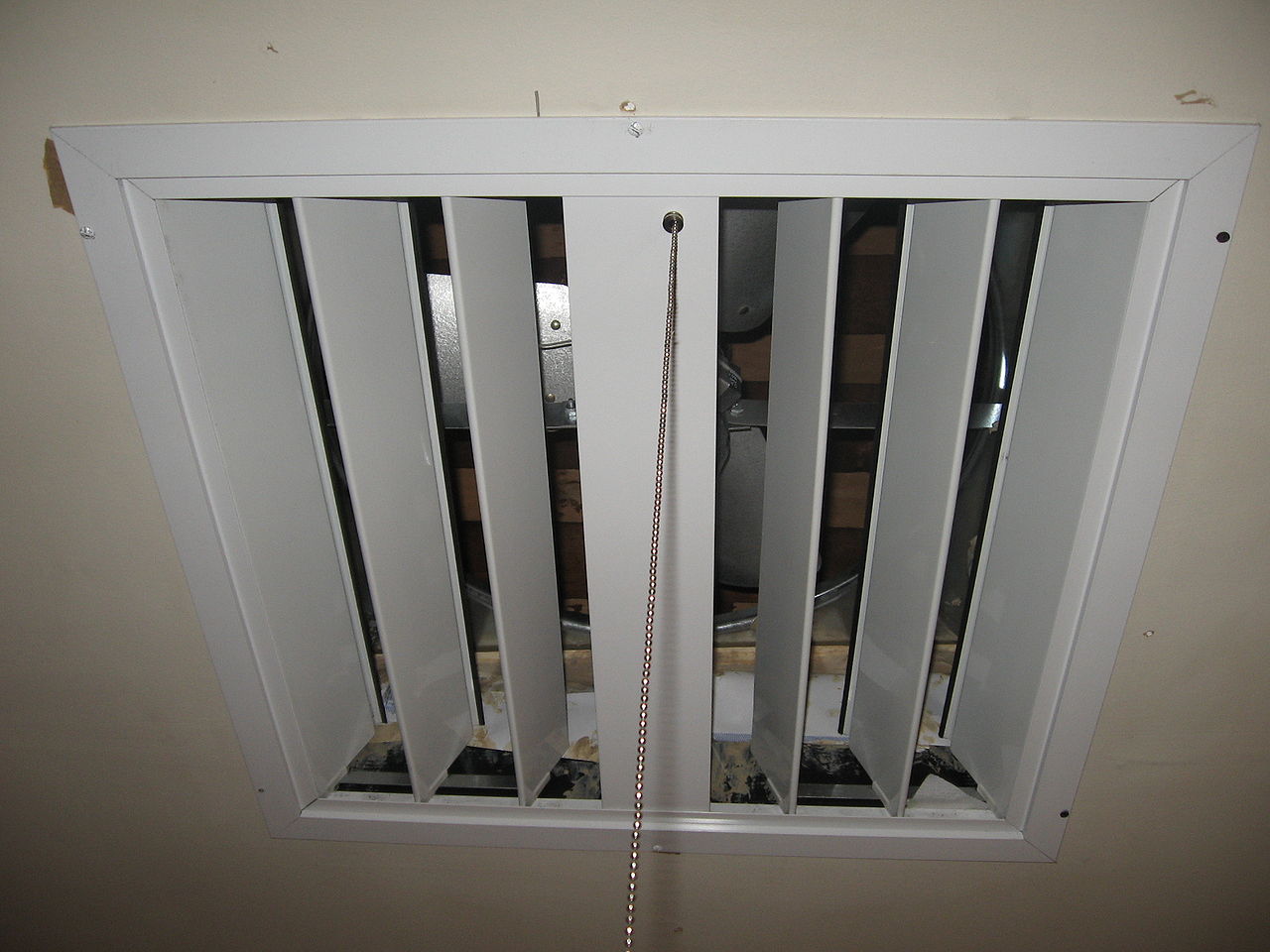
Weststar Chimney Sweeps is very familiar with this rule as the sooty messes we were hired to clean up where results of homeowners neglecting to close their fireplace dampers. Since the suction of a whole house fan is so strong, it can draw outside air in through any available opening, including a chimney. When the air gets sucked in through the chimney, it brings in soot and ashes from your flue. This influx of chimney air can also pose a risk of carbon monoxide poisoning because exhaust is brought into your home. If you have a fireplace and a whole house fan, be sure you have a fireplace damper with an air-tight seal that will close out any outside air while the whole house fan is in use.
You must seal and insulate your whole house fan during the winter.
If your whole house fan is not insulated or sealed, cold air from the attic will be able to leak into your home’s living space. Similarly, warm air from your living area can escape, which will negate the money you save on cooling your home because you will have such expensive heating bills. Fortunately, there are models of whole house fans with motorized insulated doors that automatically open when you turn the fan on and close when you turn off the fan.
People who suffer from allergies should not use whole house fans.
Since whole house fans bring outdoor air inside your home, anyone with pollen allergies, asthma, or other respiratory conditions should not use a whole house fan to cool their homes, especially if they live in an area with heavy pollen and/or pollution.
People who live in areas with high humidity also should reconsider using a whole house fan.
A whole house fan would bring the humidity into your home, which makes the temperature rise and the air sticky and uncomfortable. Living in a hot and humid area makes central air conditioning a necessity, not an option.
Have questions about using a whole house fan? Contact Weststar Chimney Sweeps to ask us anything about this topic.
by Mike O'Mara | Oct 16, 2014 | Chimney Maintenance, fire safety
Look for the CSIA seal when evaluating a chimney company for hire
Hiring a chimney sweep who has been certified by the Chimney Safety Institute of America (CSIA) to perform your annual chimney cleaning and inspecting ensures you have a highly trained and qualified technician doing the job. A CSIA-certified chimney sweep can be entrusted to be certain your chimney is properly cleaned, safe to use, and in excellent working condition. Our chimney sweeps at Weststar Chimney Sweeps have been through the CSIA certification process, which gives them further training, skills, and knowledge in this industry. Our customers often ask us what this certification means, and we would like to answer this by telling you more about the importance of this professional commitment.
What is the CSIA?
A non-profit, educational organization, the CSIA is dedicated to preventing and eliminating of chimney fires, carbon monoxide leaks, and other chimney-related dangers that can result in injuries or death. To achieve this goal, a vast collection of resources is provided to educate the public, chimney and venting system professionals, and fire prevention specialists about the proper maintenance of fireplace, chimney, and venting systems. The CSIA offers the only national certification program in the chimney and venting system industry.
What are the responsibilities and commitments of a CSIA-certified chimney sweep?
When a chimney sweep completes the training for CSIA certification, he or she must uphold specific obligations, which include:
● Practicing CSIA-recommended chimney and venting safety techniques
● Improving skills, extending a knowledge base, and learning new techniques to stay updated on safety standards for the chimney and venting of fireplaces
● Knowing all applicable local building codes concerning chimneys and fully complying with these codes
● Following closely all manufacturers’ installation instructions for chimney and venting products
● Dealing honestly with customers, refraining from unfair and deceptive practices, and informing customers about essential chimney and venting safety procedures
● Behaving professionally and respectfully when performing chimney and venting duties.
What is the process of CSIA certification?
To become certified by the CSIA, one must do the following:
● Attend a one-day intensive review session in person or a one-week review session online
● Pass a one-hour exam based on the 2011 edition of the CSIA publication Successful Chimney Sweeping and the 2013 edition of NFPA 211: Standard for Chimneys, Fireplaces, Vents, and Solid Fuel-Burning Appliances from the National Fire Prevention Association
● Pass an open-book 90-minute exam using his/her copy of 2006 International Residential Code, published by the International Code Council
● Agree to pay the Annual Certification Fee
● Sign the CSIA Code of Ethics
What topics are covered in the certification process?
To receive CSIA certification, one must prove proficiency in the following areas:
● Technical aspects of chimney dynamics and construction
● Skilled performances of the best and current techniques in the industry
● Wood-burning physics and the formation of creosote residue, which is one of the leading causes of chimney fires
● Familiarity of and compliance with all applicable codes, regulations, clearances, and standards
● Care and installation of a variety of types of solid fuel appliances
● Requirements by the US Environmental Protection Agency
To hire one of our CSIA-certified chimney sweeps, contact Weststar Chimney Sweeos today to schedule an appointment for your annual chimney sweeping
by Mike O'Mara | Sep 30, 2014 | Chimney Maintenance, fire safety

Don’t wait another day — schedule your own chimney sweeping today!
With temperatures dropping every day, winter will be here before we know it. Weststar Chimney Sweeps knows you want to start enjoying a warm fire in your fireplace as soon as you can, but we recommend your chimney be professionally swept and inspected by one of our CSIA-certified chimney sweeps before you light that first fire. According to the National Fire Prevention Association (NFPA), at least 12,000 Americans die every year in a house fire. One of the best ways to avoid having a devastating fire at your home is to have your chimney cleaned before the winter season.begins. The Chimney Safety Institute of America (CSIA), the NFPA, and other fire prevention and safety organizations recommend you have your chimney professionally swept and inspected at least once a year. Scheduling this annual sweeping and inspection in the late summer and early fall ensures your fireplace will be safe to use in the winter. We would like to tell you why it is so essential to have your chimney cleaned before you begin using it regularly in the colder months. We would also like to share some fire safety tips from the University of Nebraska-Lincoln.
Have Your Chimney Professionally Cleaned Before Winter
Safety is the main reason you should have your chimney swept and inspected before you light your first fire of the winter season. One of the biggest causes of chimney fires is large accumulations of creosote within your chimney. Developed naturally during the condensation process when the byproducts of combustion exit your chimney, creosote is highly flammable. If you neglect scheduling a professional chimney sweeping and inspection and large amounts of creosote remain inside your chimney, a home fire can be in your near future. Weststar Chimney Sweeps will be sure all creosote will be removed when we clean your chimney. We will also inspect your entire chimney to make sure there are no essential repairs. For example, a cracked chimney liner can lead to dangerous carbon monoxide leaking into your home, which can cause illness and possible death.
Other Safety Precautions for Winter
● Place some sort of shield, such as glass fireplace doors or a mesh screen, around your fireplace to keep sparks from jumping out and igniting a fire in your home.
● Make sure no flammable items are in the area around your fireplace just in case ash, sparks, or smoke exits your fireplace into your home.
● Use dry, seasoned firewood to build your fires. This type of wood cuts down on the amount of creosote produced when burning wood. Burning wet wood actually increases and speeds up the development of creosote deposits.
● Store your firewood off the ground to keep it dry and to prevent insects from living in the wood and entering your home when you bring it inside to burn. Few insects can survive if the wood is dry.
The fall is the busiest time of year for Weststar Chimney Sweeps. Contact us today to schedule an appointment with one of our chimney sweeps now so that you do not have to wait for weeks to have your pre-winter chimney cleaning and inspection.